
The initial condition of a struck string refers to the state of the string at the moment it is first plucked, struck, or activated to produce sound.
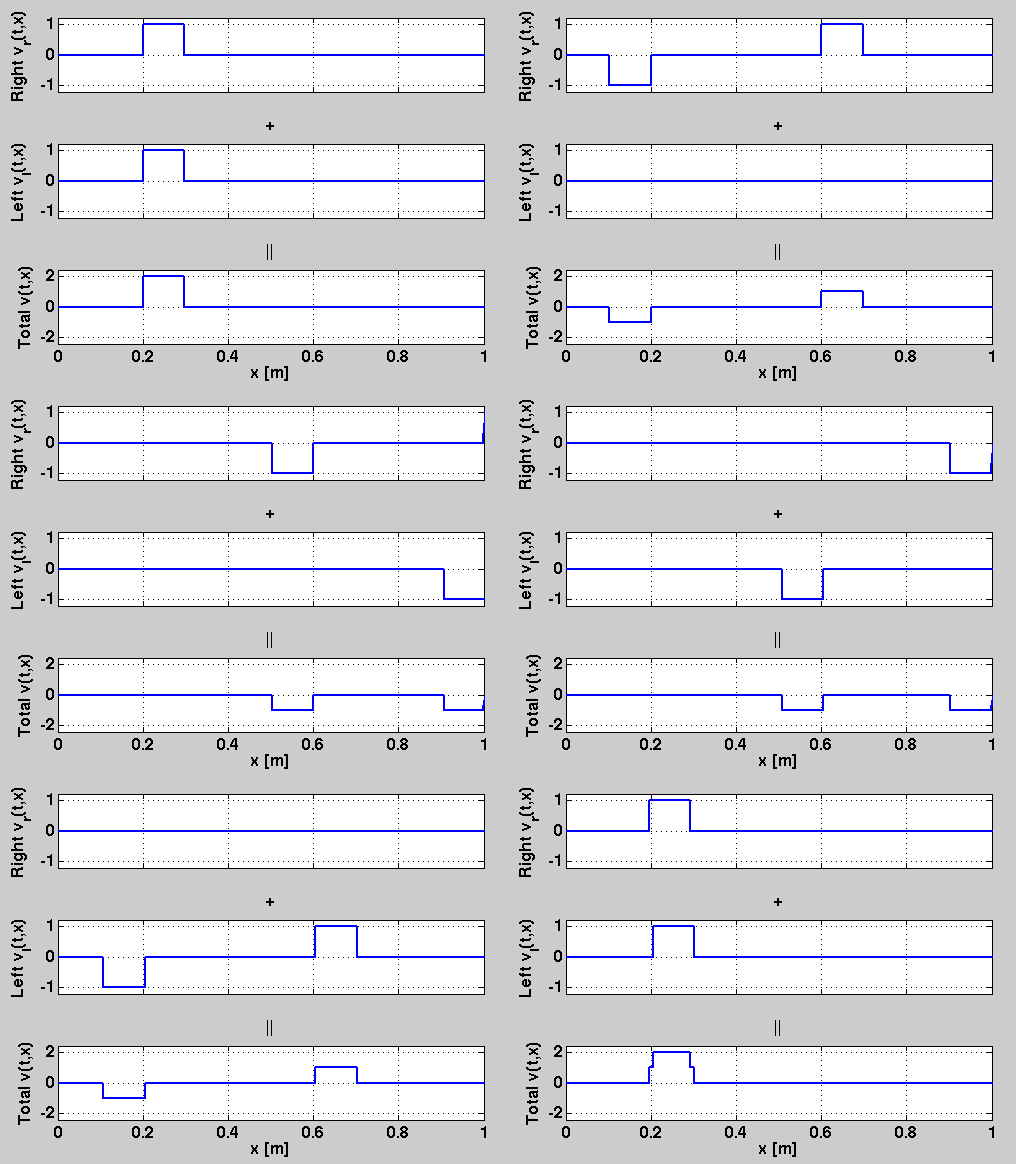
This condition encompasses several key aspects:
- Position: The string is initially at rest in its equilibrium position. It has no displacement from its rest position.
- Velocity: At the moment of striking or plucking, the string has zero velocity. It is not moving in any direction.
- Tension: The string is under tension, which is typically provided by the tuning pegs or pins at its ends. This tension determines the fundamental frequency of vibration.
- Boundary Conditions: The string is subject to boundary conditions set by its attachment points. One end of the string is typically anchored or fixed, while the other end is free to vibrate. These boundary conditions affect the string's behavior.
- Material and Thickness: The string's material and thickness are also part of the initial condition. These properties influence the string's mass and stiffness, which in turn affect its vibration characteristics.
- Damping and Energy Loss: In practice, there may be some initial damping or energy loss due to factors like friction and air resistance, although these are usually minimal at the instant of striking.
- Shape of Initial Displacement: The way the string is plucked or struck determines the shape of its initial displacement. For example, plucking a guitar string with a pick results in a different initial shape compared to plucking it with a finger.
- Forces and Impulses: The forces applied to the string at the moment of striking or plucking, including the magnitude and direction of the force, influence the string's motion. The impulse imparted to the string affects its behavior.
In summary, the initial condition of a struck string is defined by its position, velocity, tension, boundary conditions, material properties, damping, the shape of its initial displacement, and the forces or impulses acting upon it at the moment of activation. These factors collectively determine the sound produced by the string and its subsequent vibration pattern.
Post a Comment